customer · patch 1.0.0.13
Upper-level buyers
The wealthiest tier of customer, drawn by valuable merchandise and signs rather than by volume. They pay the margins that make a bad week survivable.
3 sources · tier 1–3
Who walks in, what they carry, what they pay.
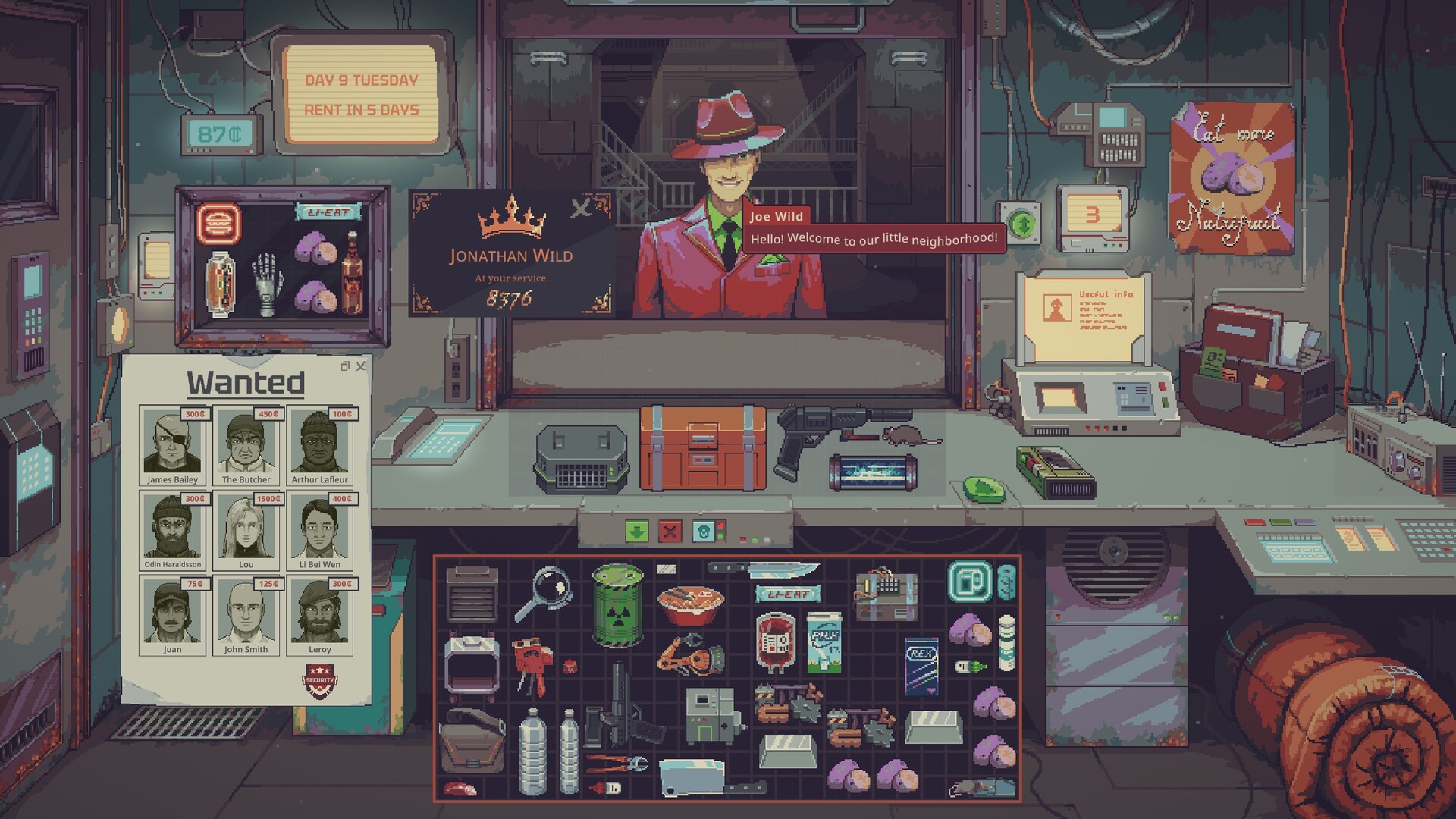
Buyers arrive with a budget, a request and a reason to be in your shop at all. Some want water, some want weapons, some are fishing for evidence, and at least one is walking around without knowing what is riding in their skull. What you stock decides who visits: the display case and the signs outside are the station’s noticeboard, and the customers who answer them are the ones your margins depend on.
Customers are the shop’s feedback loop. What you stock decides who visits, who visits decides what you can charge, and what you charge decides which customers keep visiting. The buyer classes below are not difficulty tiers — they are different economies sharing one counter.
Two mechanics are worth knowing before the rest. First, a budget is a hard ceiling: a sale above it simply does not happen. Second, the display case is advertising, and its contents move which classes answer. Most disappointing weeks are one of those two facts being ignored.
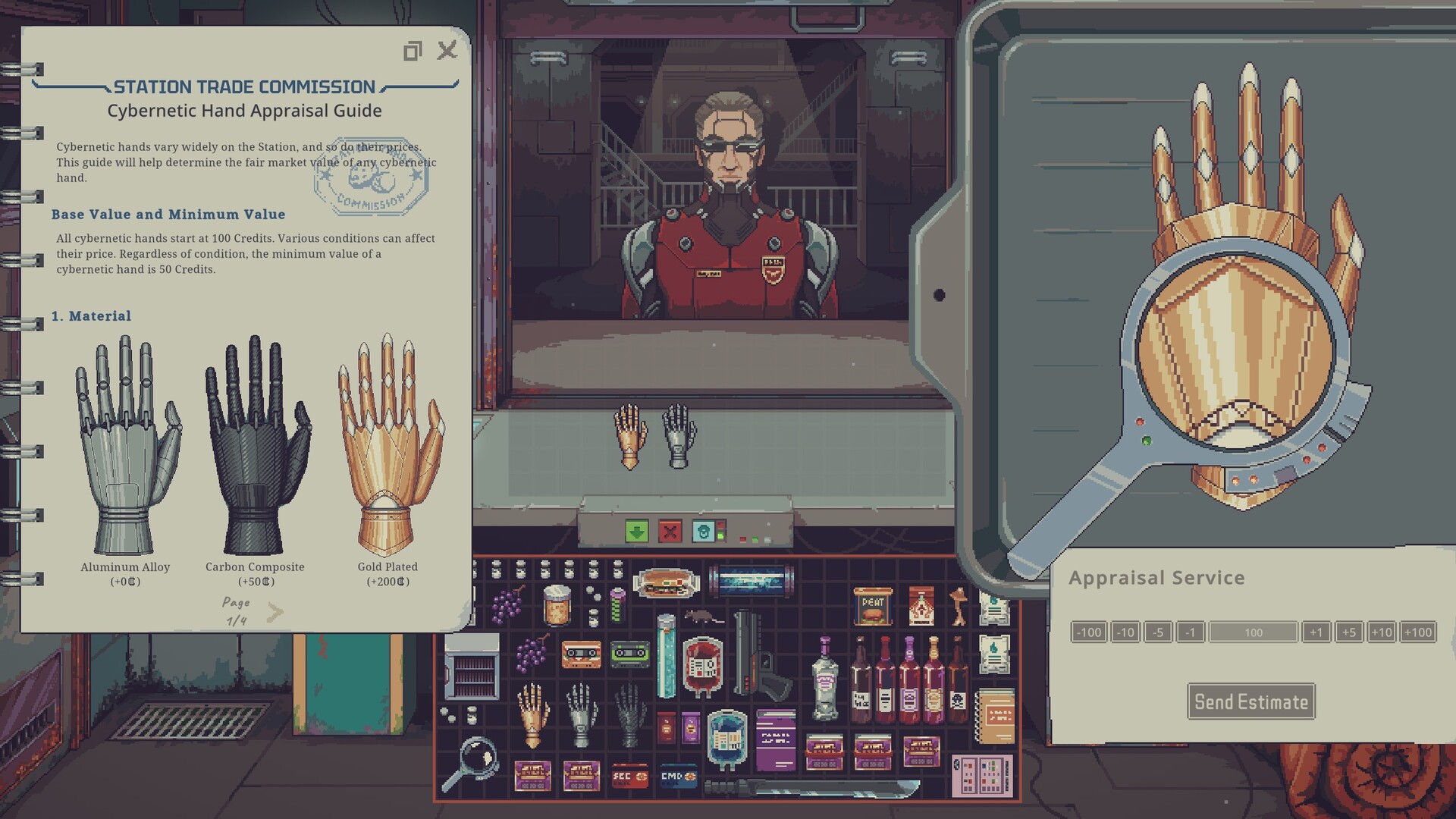
The wealthiest tier of customer, drawn by valuable merchandise and signs rather than by volume. They pay the margins that make a bad week survivable.
3 sources · tier 1–3
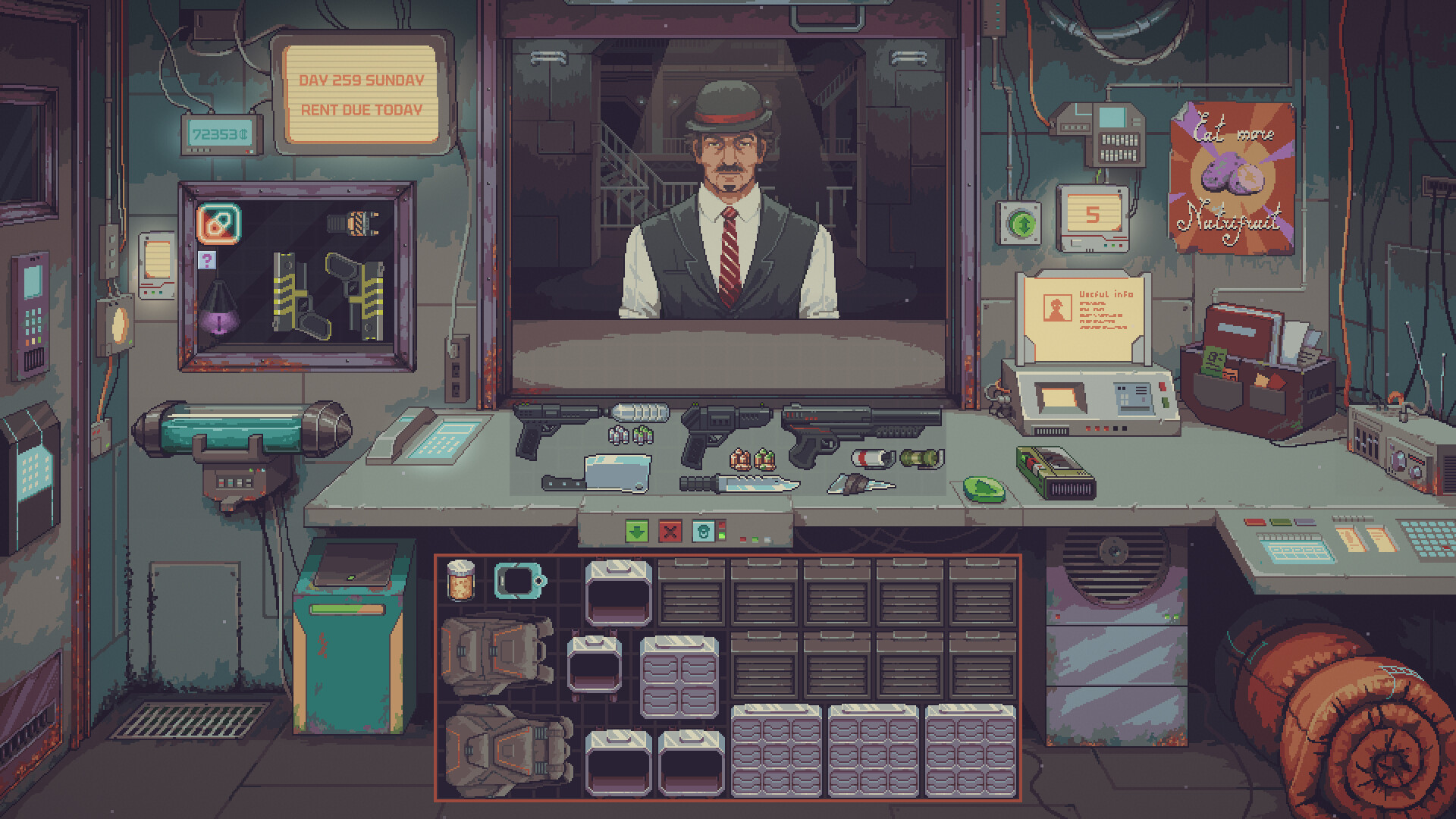
Buyers who pay more when the shelf offers a varied selection instead of a single product line, with a standing bonus that stacks on top of the item price.
2 sources · tier 1–3
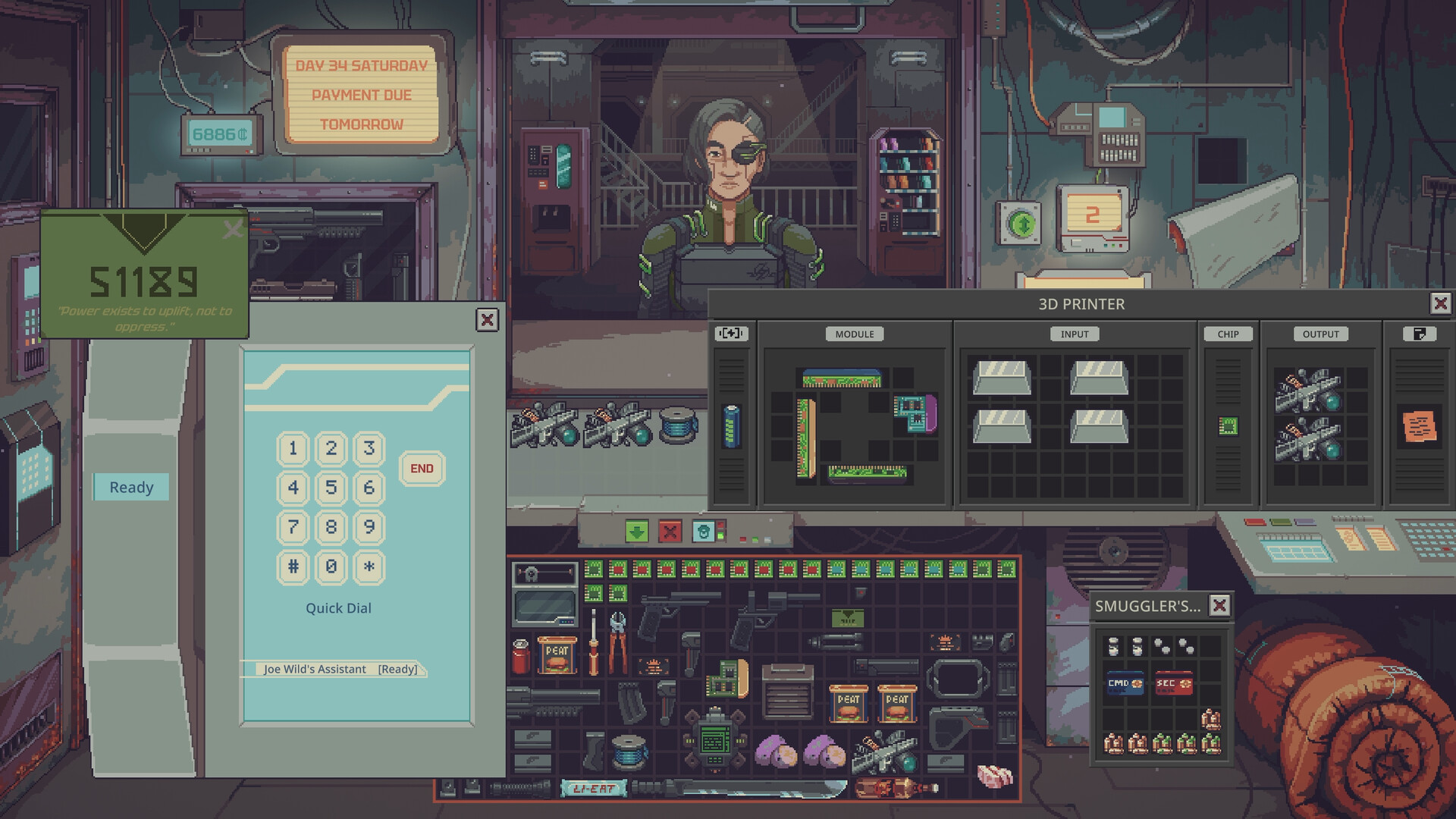
One of the station’s pop-culture customers: a themed visitor who turns up for food and drink, buys in small amounts, and can be switched off in the options.
2 sources · tier 1–1
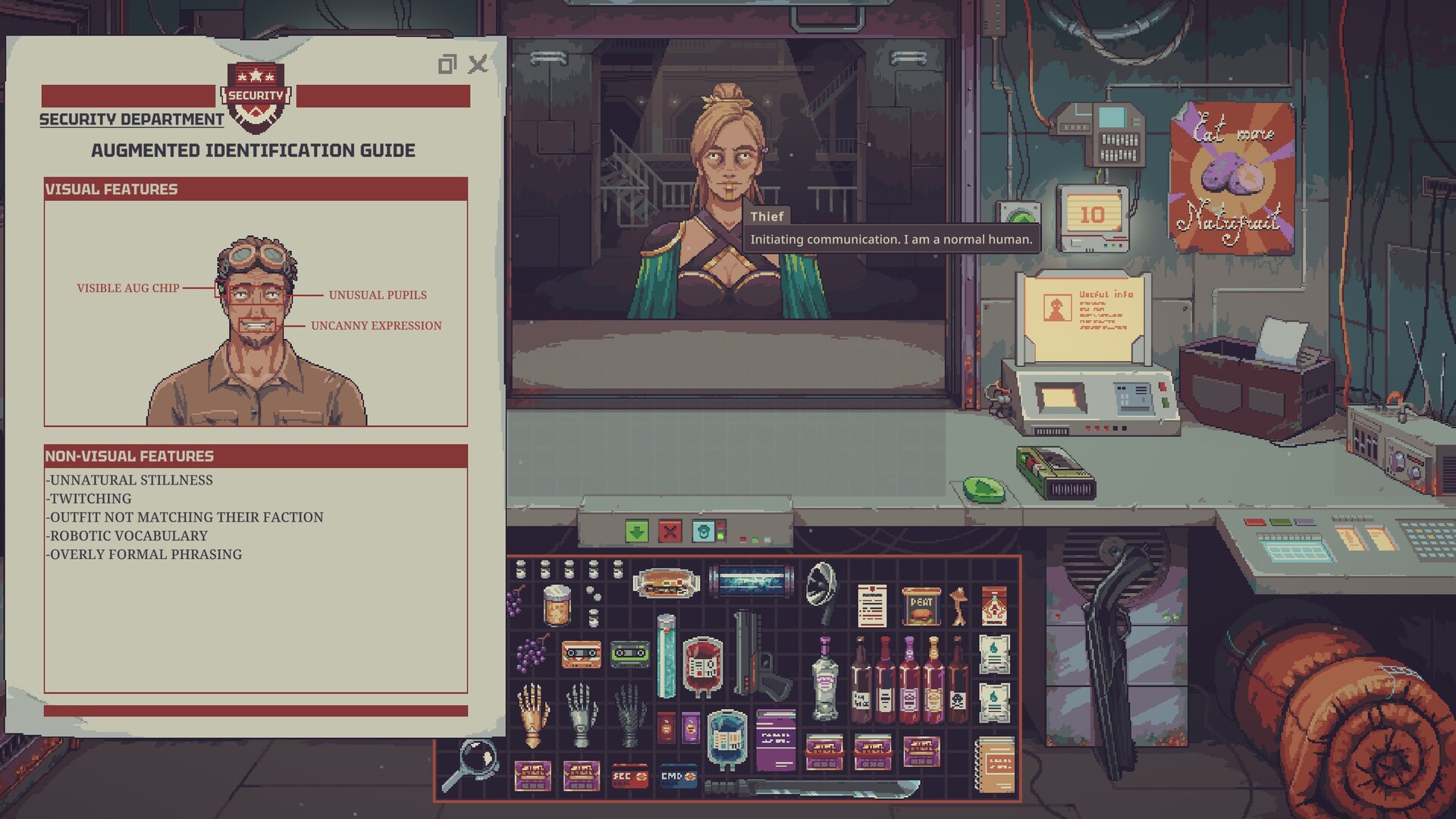
A pop-culture customer defined by the display case: he arrives for what is presented behind glass rather than what is stacked on the counter.
2 sources · tier 1–3
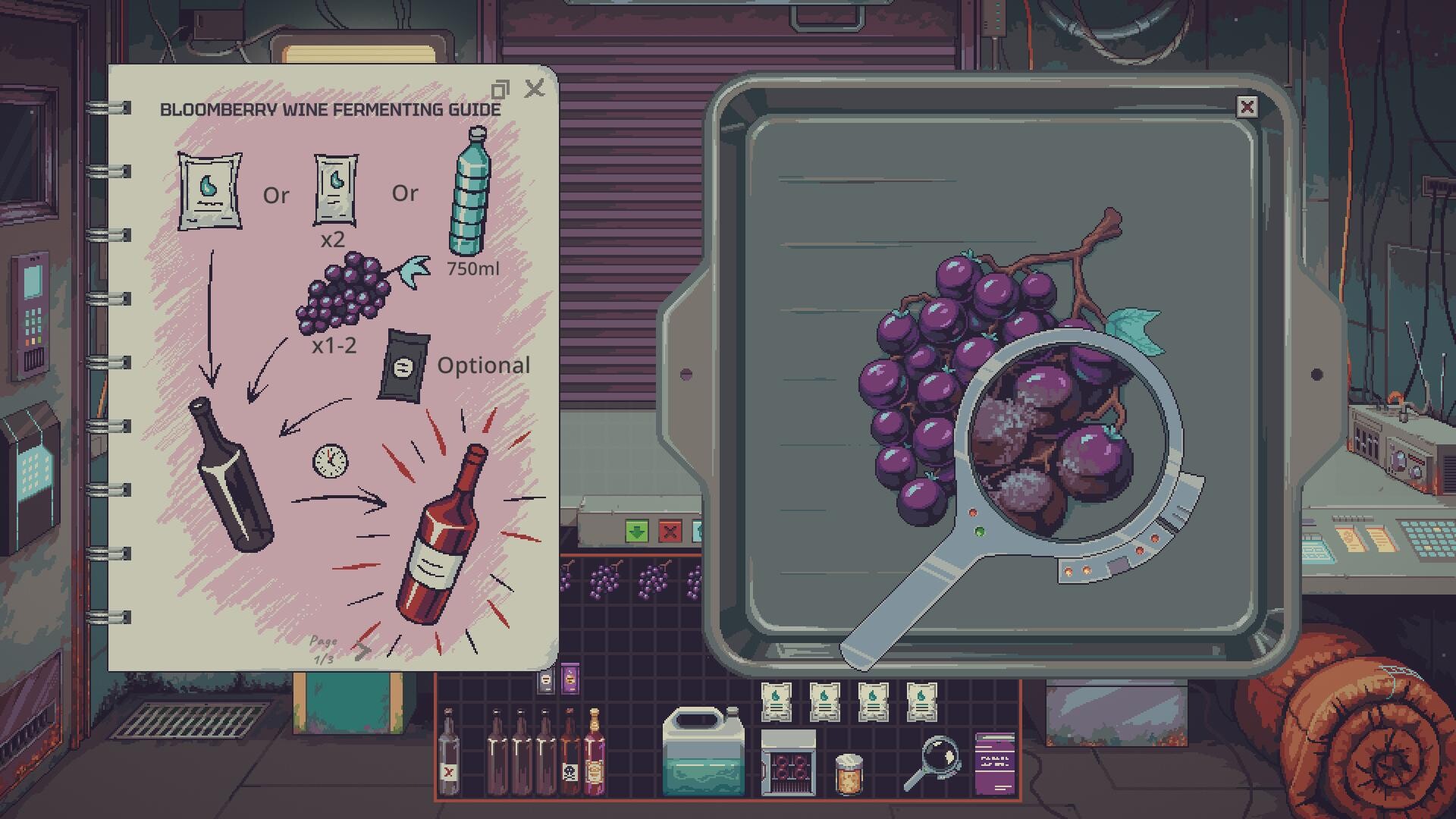
The customer class created by the chemical trade: returning buyers whose demand is reliable and whose state deteriorates as you keep supplying them.
2 sources · tier 1–3
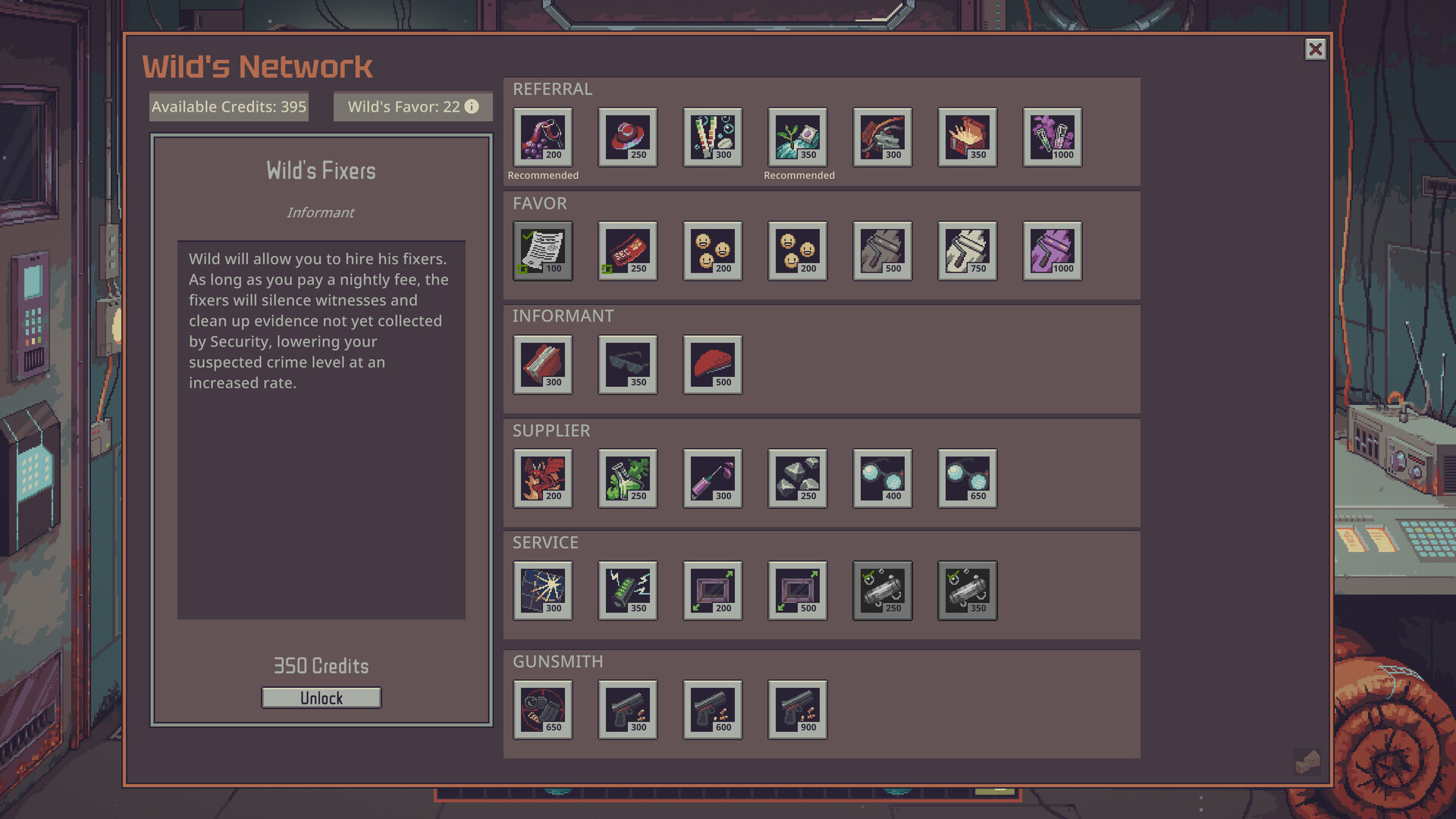
A network of retired traders who sell unconventional upgrades — water taps, custom stock, machines — to shops willing to buy outside the licensed market.
2 sources · tier 1–1
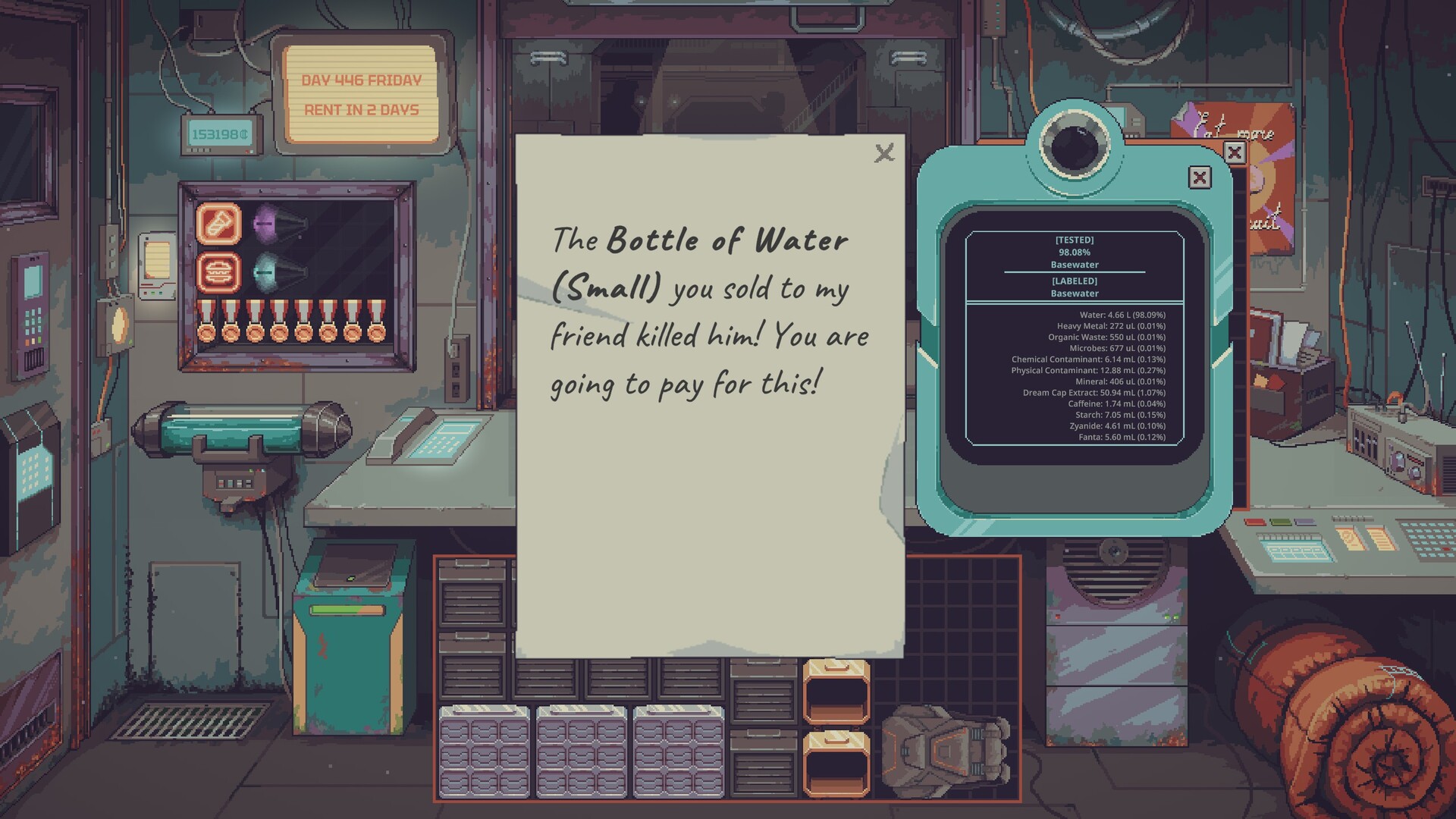
People carrying a rogue AI chip. Every faction on the station agrees on the policy, and the shopkeeper is the one holding the gun that enforces it.
3 sources · tier 1–3