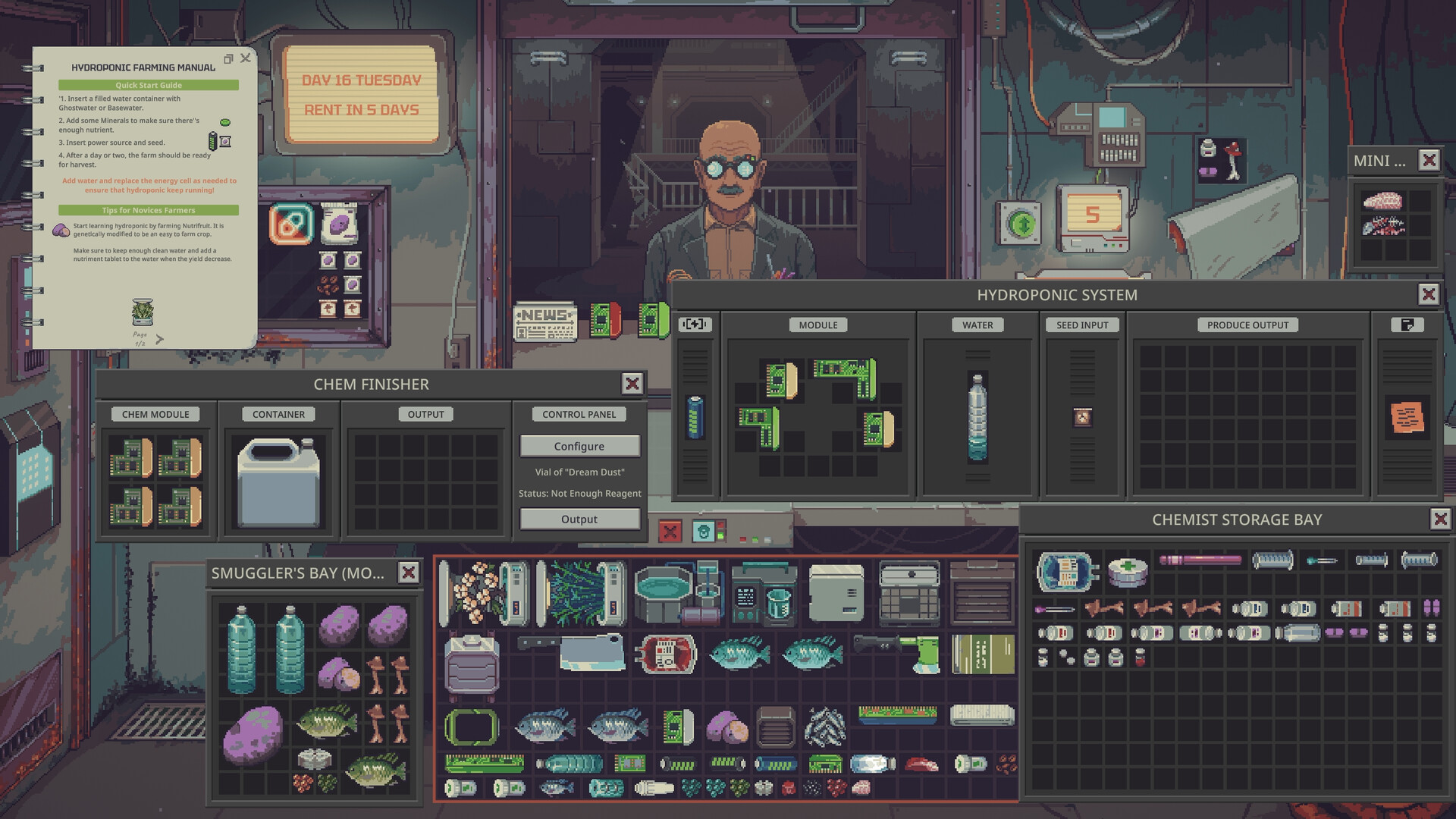
machine · patch 1.0.0.13
Water purifier
Takes dirty liquid in and pushes it up the quality ladder. Filters, UV passes and the purifier itself stack into a product buyers can price.
3 sources · tier 1–3
What is bolted to the floor and how it runs.
Machines turn raw stock into sellable product: purifiers clean water, finishers cut chemicals, printers build weapons, bays hide what inspections are looking for. Each one has an input grid, an output grid, a power draw and a module bay that changes what it is worth. The count on every machine card is not decoration — a machine that cannot cover its own power draw overnight is a loss that only shows up in the morning ledger.
Machines are the capital half of the shop. A machine that is idle is worse than a machine that was never bought, because the credits are gone and the floor space is not. The three numbers worth tracking for any of them are input supply, power draw and output capacity — a chain stalls at whichever of those runs out first, and the stall is usually invisible until the morning ledger.
Upgrades change the shape of a machine rather than only its speed: module bays decide what a printer can make, a filter stage decides what a purifier can clean, and a bay decides what an inspection can see. The pages below describe what each machine is for before describing what it costs.
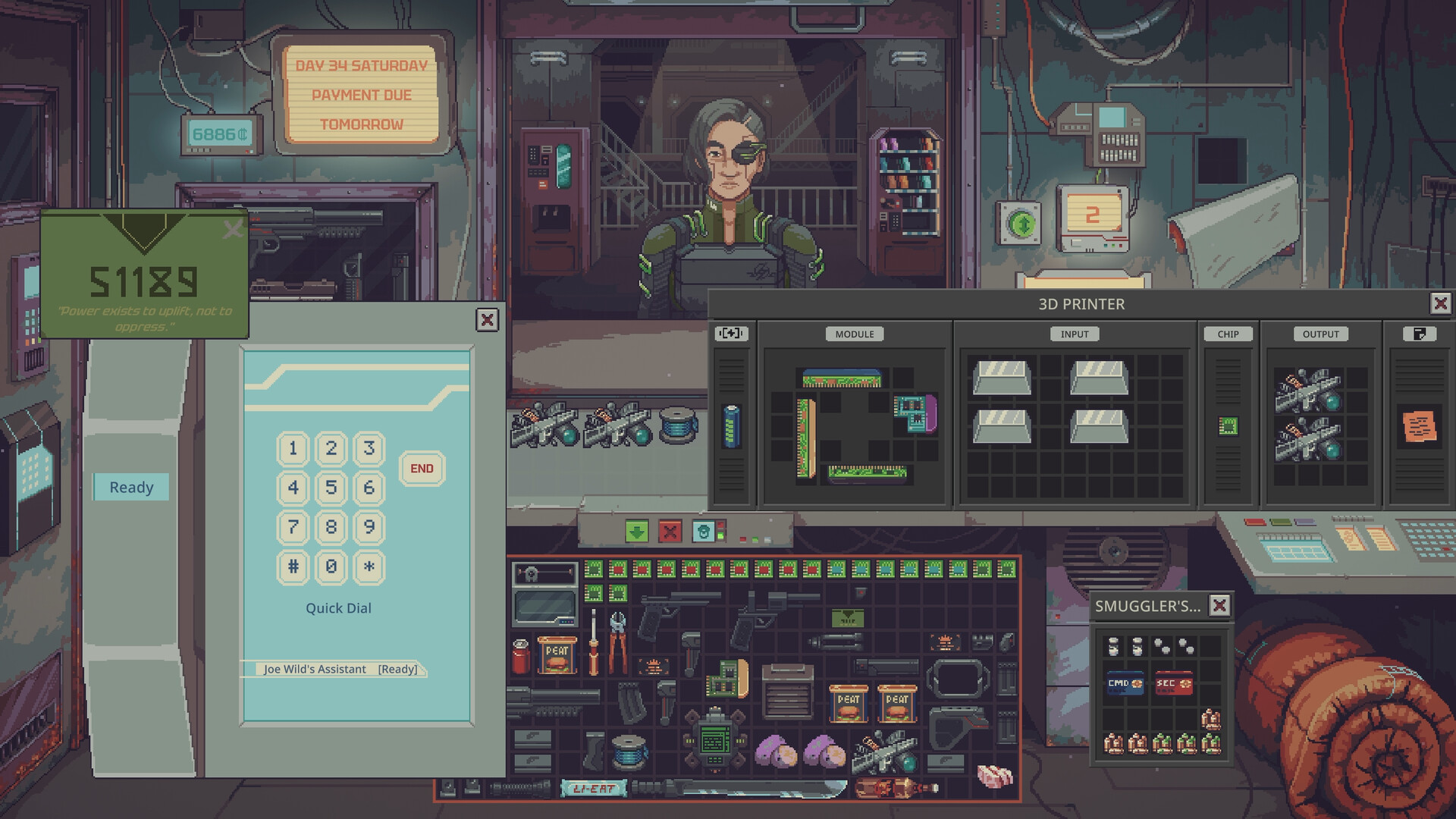
Takes dirty liquid in and pushes it up the quality ladder. Filters, UV passes and the purifier itself stack into a product buyers can price.
3 sources · tier 1–3
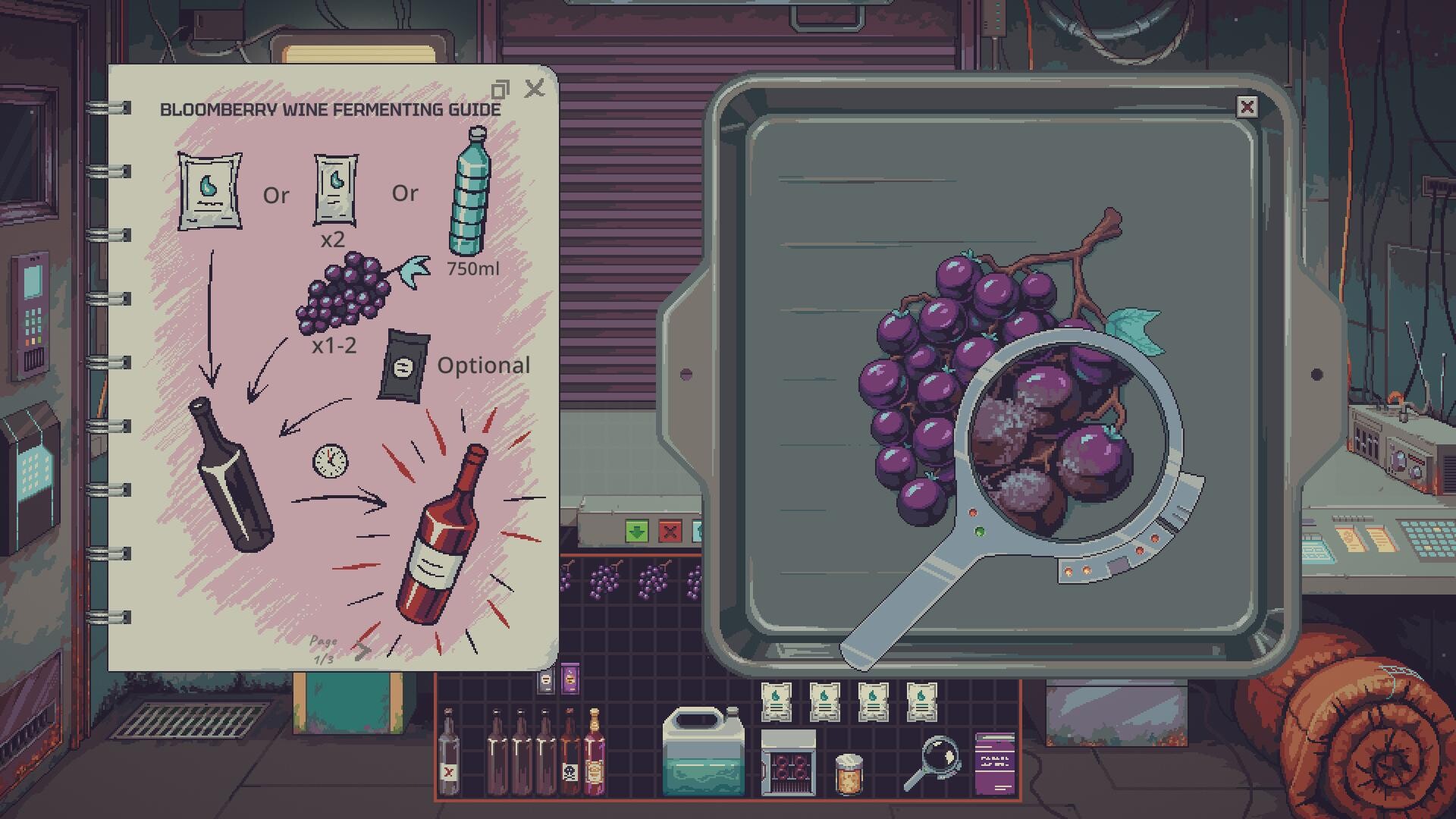
Applies the recipe pass to a prepared input, converting mixed chemical stock into something a buyer will name and pay for.
2 sources · tier 1–3

Prints sellable items from scrap and modules, which is how a gunsmith keeps margin alive without a supplier.
2 sources · tier 1–3
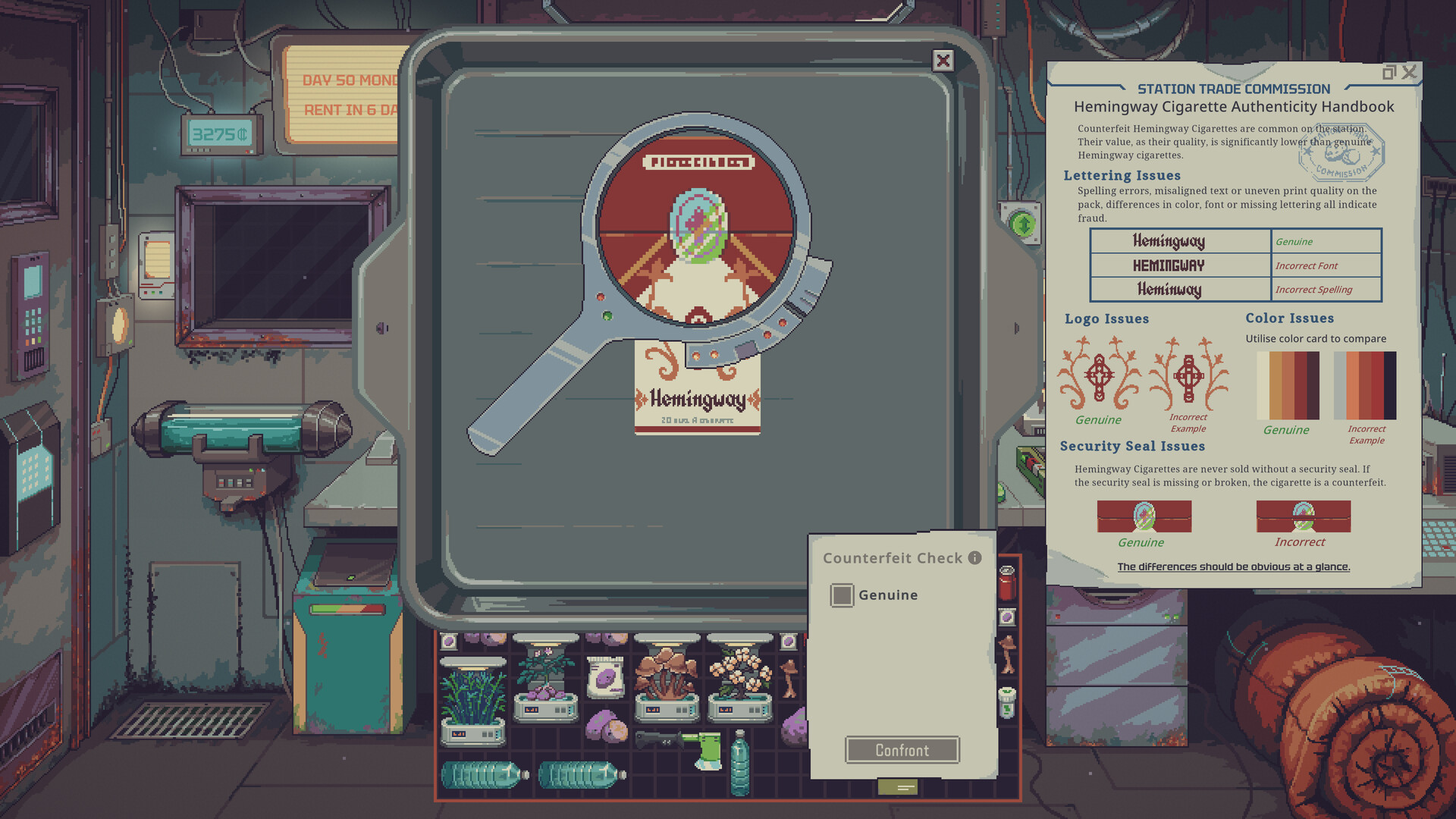
A concealed storage bay for stolen and contraband stock. Two sizes exist, both sold through the Underground Exchange.
2 sources · tier 1–1
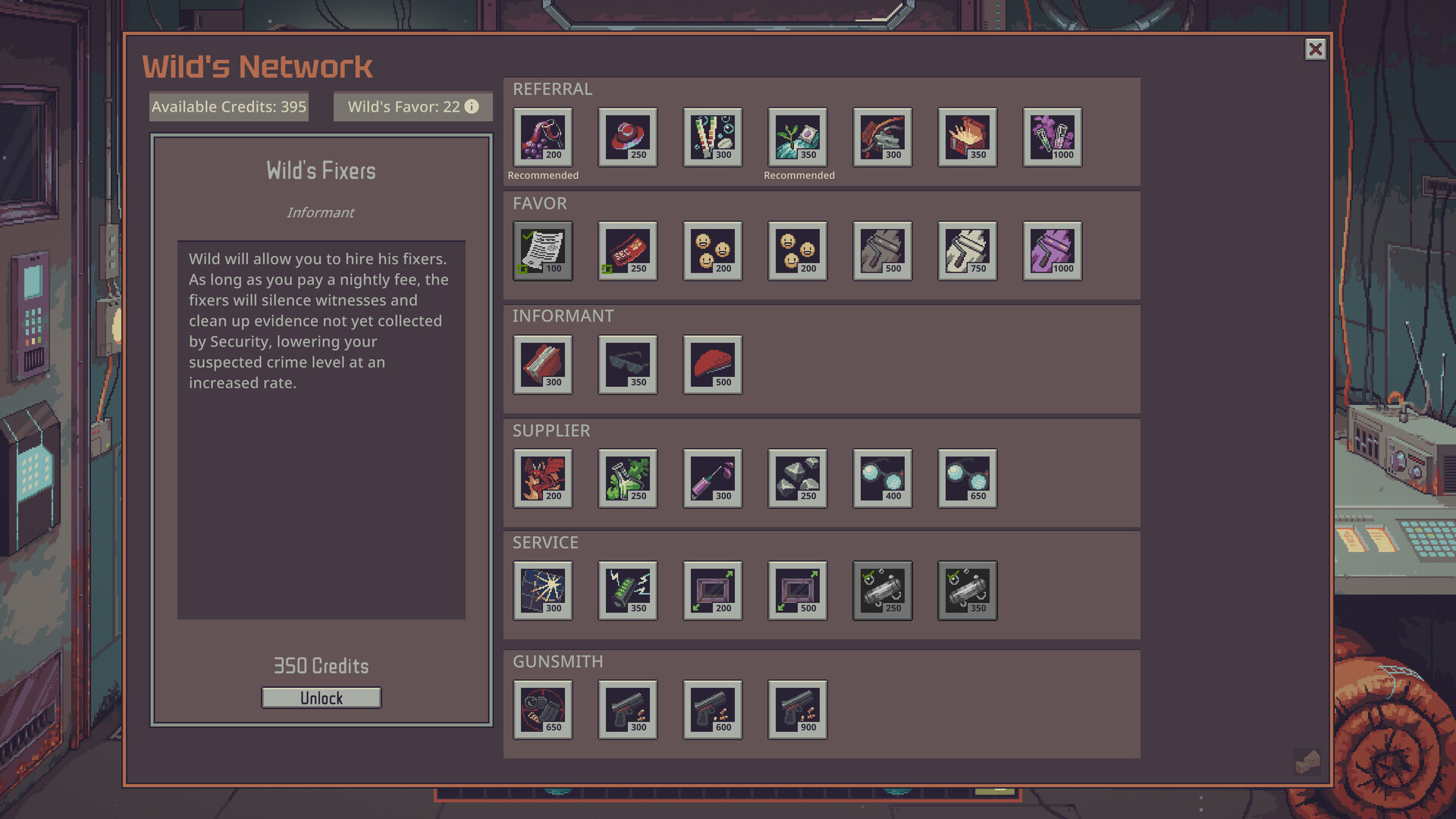
Sells stock overnight after the shop closes, giving the day’s leftover merchandise a second, hands-off market.
2 sources · tier 1–3
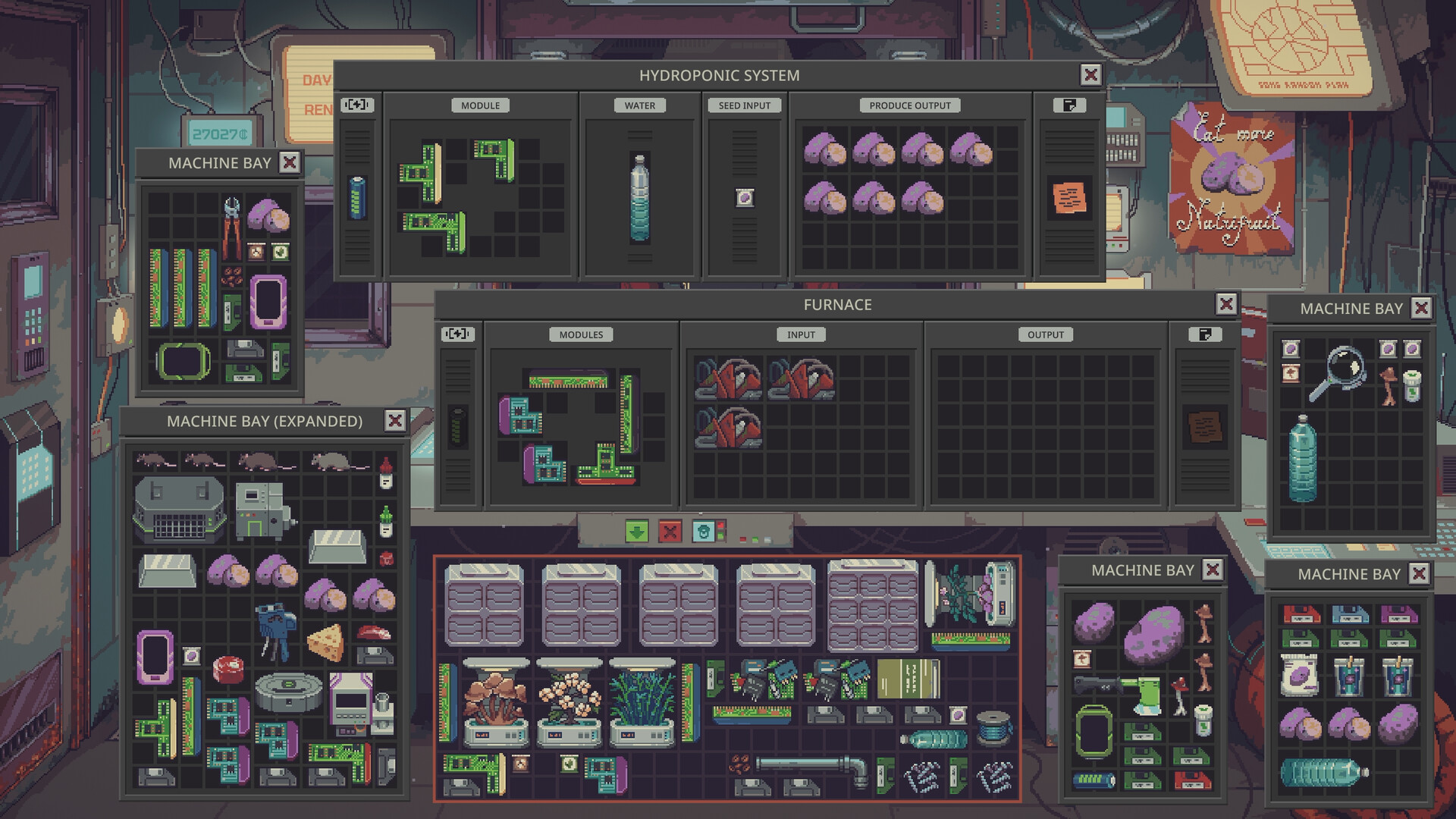
Pulls drinking-water base stock out of the station’s air. It is the cheapest way for a shop to stop buying its raw input from somebody else.
2 sources · tier 1–1
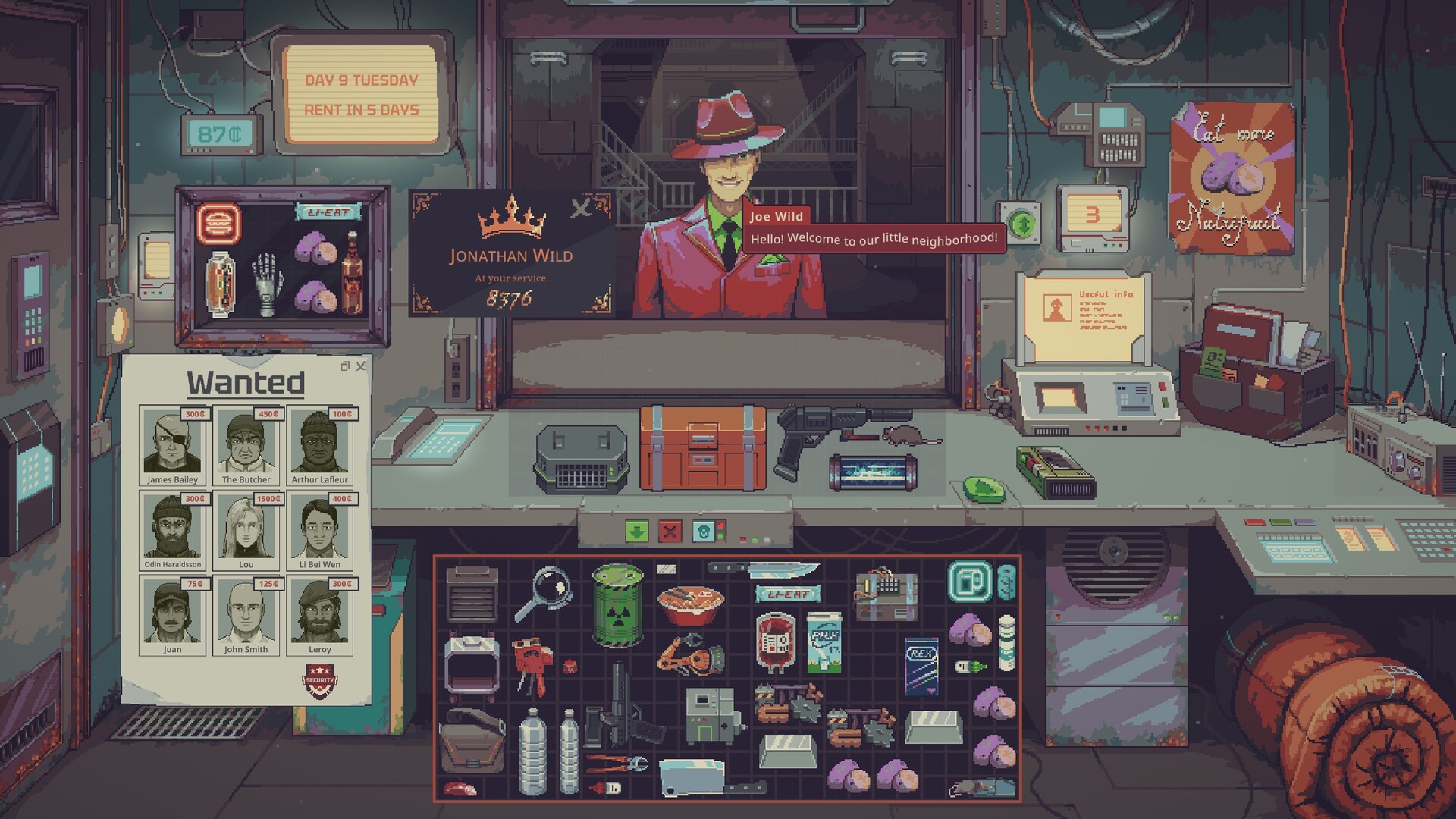
A melting machine that turns junk stock into material worth printing, feeding the production half of the shop.
2 sources · tier 1–1